ใครออกเดทกับ Raymond Radiguet?
Beatrice Hastings วันที่ Raymond Radiguet จาก ? ถึง ?. ช่องว่างอายุ 24 ปี 4 เดือน 22 วัน.
Irène Lagut วันที่ Raymond Radiguet จาก ? ถึง ?. ช่องว่างอายุ 10 ปี 5 เดือน 15 วัน.
Jean Cocteau วันที่ Raymond Radiguet จาก ถึง . ช่องว่างอายุ 13 ปี 11 เดือน 13 วัน.
Raymond Radiguet

Raymond Radiguet (French: [ʁɛmɔ̃ ʁadiɡɛ]; 18 June 1903 – 12 December 1923) was a French novelist and poet. His two novels, noted for their explicit themes and unique style and tone, were praised by many of the greatest writers of the time. He died unexpectedly at the age of twenty.
อ่านเพิ่มเติม...Beatrice Hastings
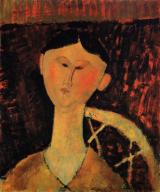
Beatrice Hastings was the pen name of Emily Alice Haigh (27 January 1879 – 30 October 1943), an English writer, literary critic, poet and theosophist. Her work was integral to British magazine The New Age which she helped edit along with her lover, A. R. Orage, prior to the outbreak of World War I. Hastings was also friend and lover of Katherine Mansfield, whose work was first published in The New Age. She also had love affairs with Wyndham Lewis and Amedeo Modigliani.
อ่านเพิ่มเติม...Raymond Radiguet
Irène Lagut
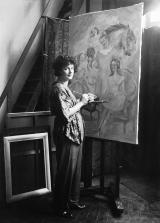
Marie-Reine Onasime Lagut, dite Irène Lagut, née le à Sucy-en-Brie et morte dans sa 102e année, le à la Maison russe de Menton, est une peintre française, élève de Picasso. Elle peignit essentiellement des têtes de femmes, des enfants et des arlequins. Elle figura à partir de 1920 au Salon de la Société des artistes indépendants.
อ่านเพิ่มเติม...Raymond Radiguet
Jean Cocteau
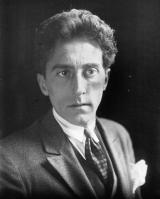
Jean Maurice Eugène Clément Cocteau (UK: KOK-toh, US: kok-TOH; French: [ʒɑ̃ mɔʁis øʒɛn klemɑ̃ kɔkto]; 5 July 1889 – 11 October 1963) was a French poet, playwright, novelist, designer, film director, visual artist and critic. He was one of the foremost avant-garde artists of the 20th century and highly influential on the Surrealist and Dadaist movements, among others. The National Observer suggested that "of the artistic generation whose daring gave birth to Twentieth Century Art, Cocteau came closest to being a Renaissance man".
He is most notable for his novels Le Grand Écart (1923), Le Livre blanc (1928), and Les Enfants Terribles (1929); the stage plays La Voix Humaine (1930), La Machine Infernale (1934), Les Parents terribles (1938), La Machine à écrire (1941), and L'Aigle à deux têtes (1946); and the films The Blood of a Poet (1930), Les Parents Terribles (1948), Beauty and the Beast (1946), Orpheus (1950), and Testament of Orpheus (1960), which alongside Blood of a Poet and Orpheus constitute the so-called Orphic Trilogy. He was described as "one of [the] avant-garde's most successful and influential filmmakers" by AllMovie. Cocteau, according to Annette Insdorf, "left behind a body of work unequalled for its variety of artistic expression".
Though his body of work encompassed many different media, Cocteau insisted on calling himself a poet, classifying the great variety of his works — poems, novels, plays, essays, drawings, films — as poésie, poésie de roman, poésie de thêatre, poésie critique, poésie graphique and poésie cinématographique.
อ่านเพิ่มเติม...