ใครออกเดทกับ Charlotte de Sauve?
พระเจ้าอ็องรีที่ 4 แห่งฝรั่งเศส วันที่ Charlotte de Sauve จาก ? ถึง ?. ช่องว่างอายุ 2 ปี 1 เดือน 18 วัน.
Francis, Duke of Anjou วันที่ Charlotte de Sauve จาก ? ถึง ?. ช่องว่างอายุ 3 ปี 4 เดือน 23 วัน.
Henry I of Lorraine, duke of Guise วันที่ Charlotte de Sauve จาก ? ถึง ?. ช่องว่างอายุ 0 ปี 9 เดือน 26 วัน.
Charlotte de Sauve

Charlotte de Beaune Semblançay, Viscountess of Tours, Baroness de Sauve, Marquise de Noirmoutier (26 October 1551 – 30 September 1617) was a French noblewoman and a mistress of King Henry of Navarre, who later ruled as King Henry IV of France. She was a member of queen mother Catherine de' Medici's notorious "Flying Squadron" (L'escadron volant in French), a group of beautiful female spies and informants recruited to seduce important men at court, and thereby extract information to pass on to the Queen Mother.
อ่านเพิ่มเติม...พระเจ้าอ็องรีที่ 4 แห่งฝรั่งเศส

Henry IV (French: Henri IV; 13 December 1553 – 14 May 1610), also known by the epithets Good King Henry (le Bon Roi Henri) or Henry the Great (Henri le Grand), was King of Navarre (as Henry III) from 1572 and King of France from 1589 to 1610. He was the first monarch of France from the House of Bourbon, a cadet branch of the Capetian dynasty. He pragmatically balanced the interests of the Catholic and Protestant parties in France, as well as among the European states. He was assassinated in Paris in 1610 by a Catholic zealot, and was succeeded by his son Louis XIII.
Henry was baptised a Catholic but raised as a Huguenot in the Protestant faith by his mother, Queen Jeanne III of Navarre. He inherited the throne of Navarre in 1572 on his mother's death. As a Huguenot, Henry was involved in the French Wars of Religion, barely escaping assassination in the St. Bartholomew's Day massacre. He later led Protestant forces against the French royal army. Henry inherited the throne of France in 1589 upon the death of Henry III. Henry IV initially kept the Protestant faith (the only French king to do so) and had to fight against the Catholic League, which refused to accept a Protestant monarch. After four years of military stalemate, Henry converted to Catholicism, reportedly saying that "Paris is well worth a Mass". As a pragmatic politician (politique), he promulgated the Edict of Nantes (1598), which guaranteed religious liberties to Protestants, thereby effectively ending the French Wars of Religion.
An active ruler, Henry worked to regularize state finance, promote agriculture, and encourage education. He began the first successful French colonization of the Americas. He promoted trade and industry, and prioritized the construction of roads, bridges, and canals to facilitate communication within France and strengthen the country's cohesion. These efforts stimulated economic growth and improved living standards.
While the Edict of Nantes brought religious peace to France, some hardline Catholics and Huguenots remained dissatisfied, leading to occasional outbreaks of violence and conspiracies. Henry IV also faced resistance from certain noble factions who opposed his centralization policies, leading to political instability. His main foreign policy success was the Peace of Vervins in 1598, which made peace in the long-running conflict with Spain. He formed a strategic alliance with England. He also forged alliances with Protestant states, such as the Dutch Republic and several German states, to counter the Catholic powers. His policies contributed to the stability and prominence of France in European affairs.
อ่านเพิ่มเติม...Charlotte de Sauve
Francis, Duke of Anjou
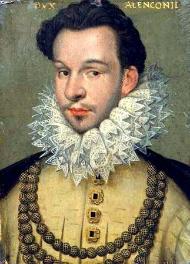
ฟร็องซัว ดยุกแห่งอ็องฌู (อังกฤษ: François, Duke of Anjou หรือ Hercule François, Duke of Anjou และ Counts and dukes of Alençon) (18 มีนาคม ค.ศ. 1555 - 19 มิถุนายน ค.ศ. 1584) พระนามเต็ม แอร์กูล ฟร็องซัว ดยุกแห่งอ็องฌู และเคานต์และดยุกแห่งอาล็องซง" เป็นพระราชโอรสองค์เล็กในพระเจ้าอ็องรีที่ 2 แห่งฝรั่งเศสและกาเตรีนา เด เมดีชี
ฟร็องซัว ดยุกแห่งอ็องฌู ทรงเป็นเด็กที่น่ารักแต่น่าเสียดายที่มีแผลเป็นจากฝีดาษเมื่อมีพระชันษาได้ 8 ปี และทรงมีพระปิฐิกัณฐกัฐิ(กระดูกสันหลัง) ที่ไม่ไคร่ปกติ ไม่เหมาะสมกับพระนาม "แอร์กูล" ที่ทำให้เปลี่ยนพระนามเป็น "ฟร็องซัว" เพื่อถวายพระเกียรติแก่พระเชษฐาพระเจ้าฟร็องซัวที่ 2 แห่งฝรั่งเศสผู้เสด็จสวรรคตในปี ค.ศ. 1560
ในปี ค.ศ. 1574 เมื่อพระเชษฐาองค์ต่อมาพระเจ้าชาร์ลที่ 9 แห่งฝรั่งเศสเสด็จสวรรคตและพระเชษฐาพระเจ้าอ็องรีที่ 3 แห่งฝรั่งเศสขึ้นครองราชย์ ฟร็องซัวก็ทรงกลายเป็นรัชทายาทแห่งราชบัลลังก์ฝรั่งเศส ในปี ค.ศ. 1576 ฟร็องซัวได้รับพระราชทานบรรดาศักดิ์เป็น ดยุกแห่งอ็องฌู, ตูแรน และแบร์รี
ในปี ค.ศ. 1576 ฟร็องซัวทรงทำการเจรจากต่อรองข้อตกลงในพระราชกฤษฎีกาบิวลี (Edict of Beaulieu)ระหว่างสงครามศาสนาของฝรั่งเศส ในปี ค.ศ. 1579 ก็ได้รับเชิญให้เป็นประมุขสืบสาย (hereditary sovereign) ของสหมณฑลแห่งเนเธอร์แลนด์ เมื่อวันที่ 29 กันยายน ค.ศ. 1580 รัฐสภาแห่งแห่งเนเธอร์แลนด์ (ยกเว้นเซแลนด์และฮอลแลนด์) ลงนามในสนธิสัญญาเพลซีส-เลอส์-ตูร์ (Treaty of Plessis-les-Tours) กับฟร็องซัว ที่ระบุให้ฟร็องซัวทรงมีตำแหน่งเป็น "ผู้พิทักษ์เสรีภาพแห่งเนเธอร์แลนด์" และเป็นพระมหากษัตริย์แห่งเนเธอร์แลนด์
อ่านเพิ่มเติม...Charlotte de Sauve
Henry I of Lorraine, duke of Guise

อองรีที่ 1 ดยุคแห่งกีส (อังกฤษ: Henry I, Duke of Guise ชื่อเต็ม Henry I de Lorraine, Prince of Joinville, Duke of Guise, Count of Eu หรือ Le Balafré หรือ "the scarred") อองรีที่ 1 ดยุคแห่งกีสเป็นขุนนางชาวฝรั่งเศส เป็นบุตรของฟรองซัวส์ ดยุคแห่งกีส และ อันนา เดสเต อองรีได้รับบรรดาศักดิ์เป็นดยุคแห่งกีสและ Grand Maître de France หลังจากการเสียชีวิตของบิดาในปี ค.ศ. 1563 อองรีมีบทบาทในการต่อสู้กับออตโตมันในฮังการีในปี ค.ศ. 1565 เมื่อกลับมาถึงฝรั่งเศสอองรีก็กลายเป็นผู้นำฝ่ายคาทอลิกในสงครามศาสนาของฝรั่งเศส อองรีต่อสู้ในยุทธการแซงต์เดอนีส์ (Battle of Saint-Denis) ในปี ค.ศ. 1567, ในยุทธการฌาร์นัค (Battle of Jarnac) และในยุทธการมงคงตูร์ (Battle of Moncontour) แต่การพยายามมีความสัมพันธ์กับมาร์เกอรีตแห่งวาลัวส์ในปี ค.ศ. 1570 นำความไม่พอพระทัยให้แก่พระเชษฐาของมาร์เกอรีต พระเจ้าชาร์ลส์ที่ 9 แห่งฝรั่งเศส แต่เมื่ออองรีไปสมรสกับแคทเธอรีนแห่งคลีฟส์ สถานการณ์ก็ค่อยกระเตื้องขึ้น ความเกรงกลัวอำนาจที่เพิ่มมากขึ้นของนายพลแกสปาร์ด เดอ โคลินยีทำให้อองรีสมรู้กันทำการฆาตกรรมและการก่อให้เกิดการสังหารหมู่วันเซนต์บาโทโลมิวในปี ค.ศ. 1572
อ่านเพิ่มเติม...