ใครออกเดทกับ Irma Serrano?
Alejo Peralta วันที่ Irma Serrano จาก ? ถึง ?. ช่องว่างอายุ 17 ปี 7 เดือน 4 วัน.
Gustavo Díaz-Ordaz วันที่ Irma Serrano จาก ? ถึง ?. ช่องว่างอายุ 22 ปี 8 เดือน 27 วัน.
Irma Serrano
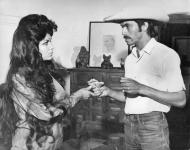
Irma Consuelo Cielo Serrano Castro (Spanish pronunciation: [ˈiɾma konˈswelo ˈsjelo seˈrano ˈkastɾo]; 9 December 1933 – 1 March 2023) was a Mexican singer, actress and politician. Famous for her "tantalizing" "untamed spitfire" voice, she was one of the most noted performers of the ranchera and corrido genres; she was nicknamed La Tigresa de la Canción Ranchera (The Rancheras Tigress) and later known simply as "La Tigresa" (Spanish pronunciation: [la ti´ɣɾesa]). At the same time, she pursued a film career with more than a dozen films. At the time of her death, she was one of the last surviving actresses from the Golden Age of Mexican cinema.
In the 1970s and 1980s, Serrano achieved great success as an actress and producer in a series of controversial stage plays, especially the controversial play Naná (1973). In the 1990s, she also ventured into politics and occupied a seat in the Mexican Senate. In her later years, she was the center of multiple scandals and controversies. She appeared in celebrity gossip magazines and television shows because of her political career as senator for her home state of Chiapas from 1994 to 1997.
อ่านเพิ่มเติม...Alejo Peralta
Alejo Peralta y Díaz Cevallos (5 May 1916 in Puebla – 8 April 1997 in Mexico City) founded the Mexico City Tigers baseball team (now known as the Tigres de Quintana Roo) in 1955. He was a well-known businessman at the time.
อ่านเพิ่มเติม...Irma Serrano
Gustavo Díaz-Ordaz
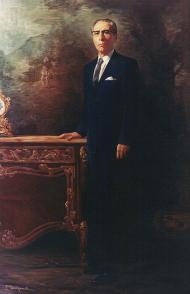
Gustavo Díaz Ordaz Bolaños (Spanish pronunciation: [ɡusˈtaβo ˈði.as oɾˈðas]; 12 March 1911 – 15 July 1979) was a Mexican politician and member of the Institutional Revolutionary Party (PRI). He served as the President of Mexico from 1964 to 1970. Previously, he served as a member of the Chamber of Deputies for Puebla's 1st district, a senator of the Congress of the Union for Puebla, and Secretary of the Interior.
Díaz Ordaz was born in San Andrés Chalchicomula, and obtained a law degree from the University of Puebla in 1937 where he later became its vice-rector. He represented Puebla's 1st district in the Chamber of Deputies from 1943 to 1946. Subsequently, he represented the same state in the Chamber of Senators from 1946 to 1952 becoming closely acquainted with then-senator Adolfo López Mateos. Díaz Ordaz was a CIA asset, known by the cryptonym, LITEMPO-2.
Díaz Ordaz joined the campaign of Adolfo Ruiz Cortines for the 1952 election and subsequently worked for the Secretariat of the Interior under Ángel Carvajal Bernal. He became the secretary following López Mateos' victory in the 1958 election, and exercised de facto executive power during the absences of the president, particularly during the Cuban Missile Crisis. In 1963, the PRI announced him as the presidential candidate for the 1964 election, he received 88.81% of the popular vote.
His administration is mostly remembered for the student protests that took place in 1968, and their subsequent repression by the Army and State forces during the Tlatelolco massacre, in which hundreds of unarmed protesters were killed. His presidency also took place during a period of high economic growth known as the Mexican Miracle, as well as hosting both the 1968 Summer Olympics and 1970 FIFA World Cup, the first country to have organized both showpiece events two years apart.
After passing on the presidency to his own Secretary of the Interior Luis Echeverría, Díaz Ordaz retired from public life. He was briefly the Ambassador to Spain in 1977, a position he resigned from after strong protests and criticism by the media. He died of colorectal cancer on 15 July 1979 at the age of 68.
Despite high economic growth during his presidency, Díaz Ordaz is considered one of the most unpopular and controversial modern Mexican presidents, largely for the Tlatelolco massacre and other repressive acts, which would continue into the presidencies of his successors.
อ่านเพิ่มเติม...